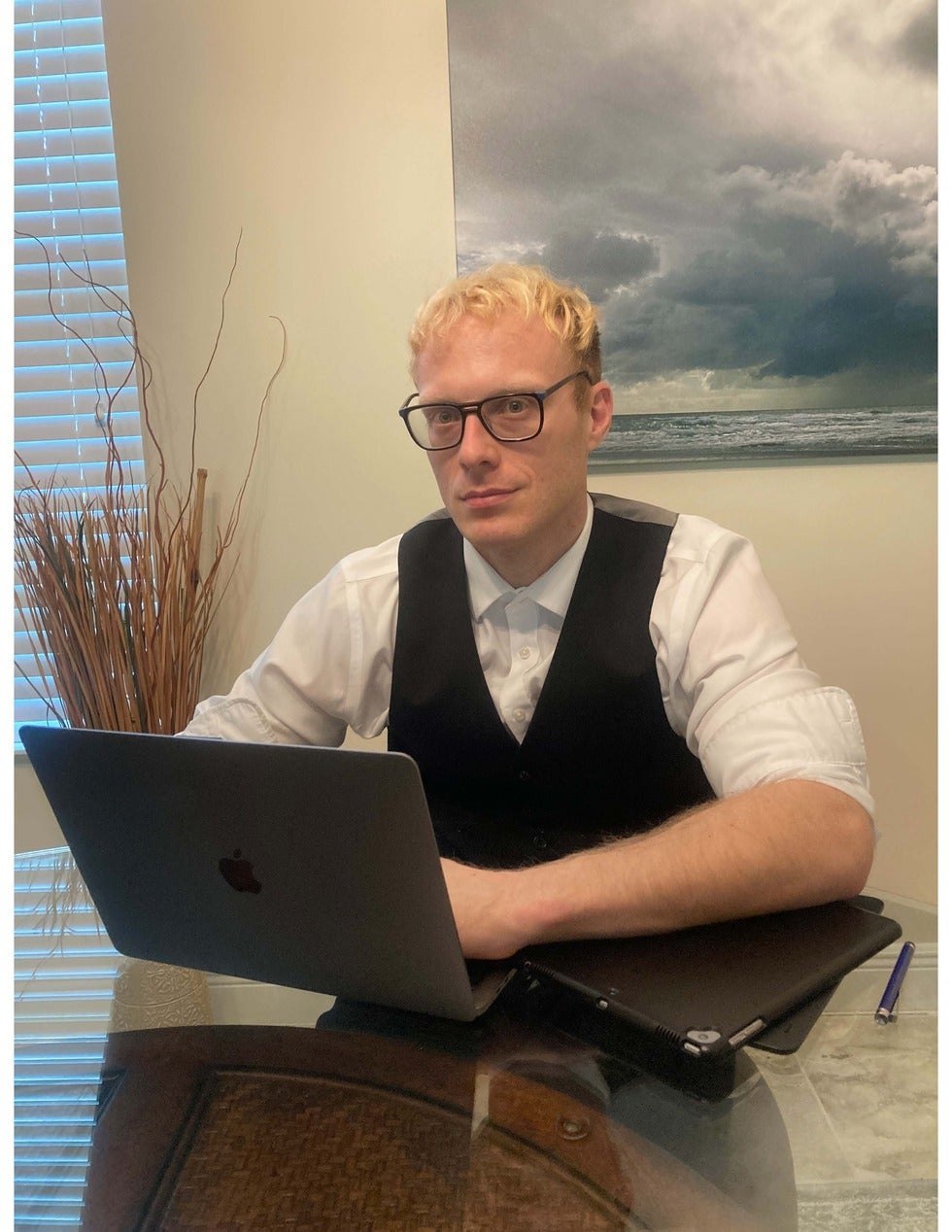
Trey M. Bruce, Esq., CPA, LL.M., CFE
(skip to firm's approach in tax, franchise, and fraud-investigation)
Pre-firm Licenses & General
In 2007, Trey graduated from Ohio State University's Fisher College of Business, summa cum laude, with a BSBA and emphasis in Economics, before attending Lewis & Clark Law School. As a law student, he devoted himself to taxation, earning a Federal Tax Law Certificate and working at the Lewis & Clark Law School's Low-Income Taxpayer Clinic. Upon graduation, he passed the Florida Bar Examination and practiced law until 2012, when he began his LL.M. in Taxation at the University of Florida. After graduating in 2013, he worked in public accounting, principally in the area of audit and assurance services.
Resolved to develop new skills, Trey eventually set out to become a CPA. Without a formal accounting “degree,” he passed the Uniform CPA Examination in 2015 and received the AICPA's Elijah Watt Sells Award, based on his performance. According to the AICPA, “[a] total of 93,742 individuals sat for the Examination in 2015, with 75 candidates meeting the criteria to receive the Elijah Watt Sells Award.” Over time, he assumed greater responsibility, including that of in-charge accountant for a variety of attest engagements, spanning a host of industries, and ultimately that of senior accountant, which included certain reviewing duties.
In 2017, he was recognized and selected for the FICPA's Emerging Leaders Program for Region III of Florida. He regards this experience as one of the most enriching of his career.
In 2019, to reinforce his capacity on anti-fraud work, Trey earned the credential of Certified Fraud Examiner (CFE), from the Association of Certified Fraud Examiners.(1)
Community, Professional Associations, and Bars
Trey served eight years on the FICPA's Accounting Principles and Auditing Standards Committee, which he chaired for the 2020-2021 fiscal year. In serving, he prepared exposure-draft responses, served as designated reviewer for proposals (while coordinating response issues), and presented on proposals to fellow members. On other FICPA committees, Trey identified speakers and helped coordinate conference presentations, organized animal-welfare service projects, and blogged.
Additionally, Trey was selected and appointed to, and he served a three-year term on (beginning in 2020), the ACFE Foundation Scholarship Committee. Such committee comprises three to seven members who “advise the ACFE Foundation Board of Directors on the awarding of scholarships.”
Trey currently serves on The Florida Bar's Clients' Security Fund Committee (term ending 6/30/26), which reviews and investigates claims for relief from the Clients' Security Fund of The Florida Bar. As an attorney, Trey is also a member of the Tax Section of The Florida Bar, the American Bar Association (ABA), the ABA Forum on Franchising, the ABA Section of Taxation, and the Maryland State Bar Association. On the other hand, as a CPA, he is a member of the AICPA.
Regarding the scope of his practice, Trey is admitted to practice law and public accounting in Florida and in Maryland. He is also admitted to practice law before the United States Tax Court; the U.S. District Courts for the Northern, Middle, and Southern Districts of Florida; and U.S. District Court for the Northern District of Ohio.
Equally dedicated to the anti-fraud profession, Trey joined, and became a signatory to, a petition to form a Fort Myers ACFE chapter in April of 2020. Formation of the Greater Fort Myers Chapter #236 was approved in May of that year, and Trey is committed to its success in serving the community and advancing other chapter goals.
Inspired to “pay it forward,” Trey has also spoken in recent years at events of college-student and non-profit audiences.
The Firm
In 2019, Trey decided to transition out of his public accounting role to form a niche law practice. Specifically, he wanted to address legal challenges that, although factually diverse, shared cross-disciplinary themes consistent with his background. Trey, as an attorney and CPA, believed that certain legal engagements routinely benefited from the contributions of other fields: (1) investigation and/or litigation of fraud matters, especially of the financial variety; and (2) practice before the IRS. As a result, he intended for the firm to practice in these areas, among others, and to leverage procedures and resources from legal, accounting, and anti-fraud fields, collectively.
Firm History
In non-tax engagements, Trey has straddled two key functions: (1) transactional work and document preparation; and (2) representation in litigation on a diversity of civil claims and areas. These have included the following, among others: disabled-adult exploitation; securities fraud; identity theft; Uniform Commercial Code liability; RICO; incapacity determination; breaches of fiduciary duties; information-security negligence; legal malpractice; Florida Enforcement of Foreign Judgment proceedings; and real property litigation, including quiet title, ejectment, and unlawful detainer actions. Trey has also represented clients in contested matters in guardianship and bankruptcy proceedings. When client interests have been best served without a proceeding, though, Trey has worked to resolve matters out of court, including in construction-lien, asset-sale, service-contract, accountant-negligence, and title disputes, among others. Alternatively, when clients have required forensic accounting or investigative services, Trey has performed these in narrowly focused engagements, including in divorce proceeding and whistleblower contexts. Regardless of the setting, Trey has often performed procedures to trace assets and/or identify concealed transactions. And along the way, he has further represented clients' interests in criminal investigations against or otherwise in relation to alleged fraudsters.
The classes of (alleged) fraud and schemes affecting engagements have been numerous, including but not limited to wire fraud, forgery, social engineering, check fraud, fraudulent construction-lien assertion, racketeering, elder exploitation, (mule) money laundering, fraudulent inducement, bribery, breach of fiduciary duties, fraudulent transfers, and notary fraud.
Regarding tax engagements, Trey has represented taxpayers seeking “opinion” work and those under IRS audit. The firm has also been engaged on matters outside of its originally contemplated practice. These have included preparing certification for streamlined filing compliance procedures (relating to previously unreported foreign financial assets); consulting on foreign-trust implications; appealing proposed property-tax assessment values; and resolving tax-position disclosure issues for significant nonrecurring items.
Moving Forward
The firm's original principles, dating back to 2019, fundamentally remain intact. However, the firm's early years have informed its understanding of when, where, and how to apply these principles to maximum effect. Recently, Trey has reflected on how to redefine the scope of the firm's services to best deploy its resources. Ultimately, he decided to add or expand certain practice areas and refine others.
The Firm's “Business” Approach in Tax, Franchise, and Fraud-Investigation:
- Bruce Law and Fraud Examination, PLLC continually strives to honor the following in its legal services:
- Unwavering commitment: once engaged, the firm should work relentlessly to advance client objectives. Clients should never be shortchanged, and their objectives never sacrificed, to compensate for overstretched resources elsewhere. The context doesn't matter, whether drafting a Franchise Disclosure Document, representing taxpayers on audit, or otherwise. Lackluster responses, attorney burnout, and deflected responsibility ≠ unwavering commitment.
- Synergistic effects: the firm should fuse disciplinary perspectives, seeking to (i) enhance protection for client interests, (ii) identify convoluted, difficult-to-spot issues, and (iii) deliver a multifaceted package of services and value.
- Individualized service: the firm's attorney-manager should be as accessible as possible to clients. Also, in an age of short attention spans, the firm should prioritize listening and welcome difficult questions. Clients deserve tailored—not cookie-cutter—responses. The same goes for deliverables, which should reflect the subtleties of clients' needs and goals.
- Nimble in response: once engaged, the firm should hit the ground running with dynamic planning and execution. Consisting of a single attorney, the firm can avoid office politics, senseless internal meetings, and excessive delegation.
- Efficient in cost: the firm should maximize research, security, and core legal-practice functions while eliminating nonessential overhead and office luxuries. It should pass cost savings to its clients.
- Straightforward communication: the firm should not sugarcoat facts for clients, who deserve the unfiltered truth. Also, if the firm believes other professionals are better suited for expressed objectives, it should communicate this promptly.
- Systematic application: integrating the prior “BUSINESS” elements, the firm should methodically direct its resources to engagement functions. Thus, as its aim, it should apply multifaceted reasoning to account for all issues material to the engagement (within its practice) and deliver services that, while cost effective, are uniquely responsive to the interests of clients, to whom the firm should remain accessible and transparent.
Notes:
(1) As indicated, the CFE certification is a credential. It is not a license.